Figures below are planning ranges for Greater Los Angeles, intended to help you build a realistic budget. They are not a quote — every project is priced from its own site, scope, and selections.
What makes hillside construction different
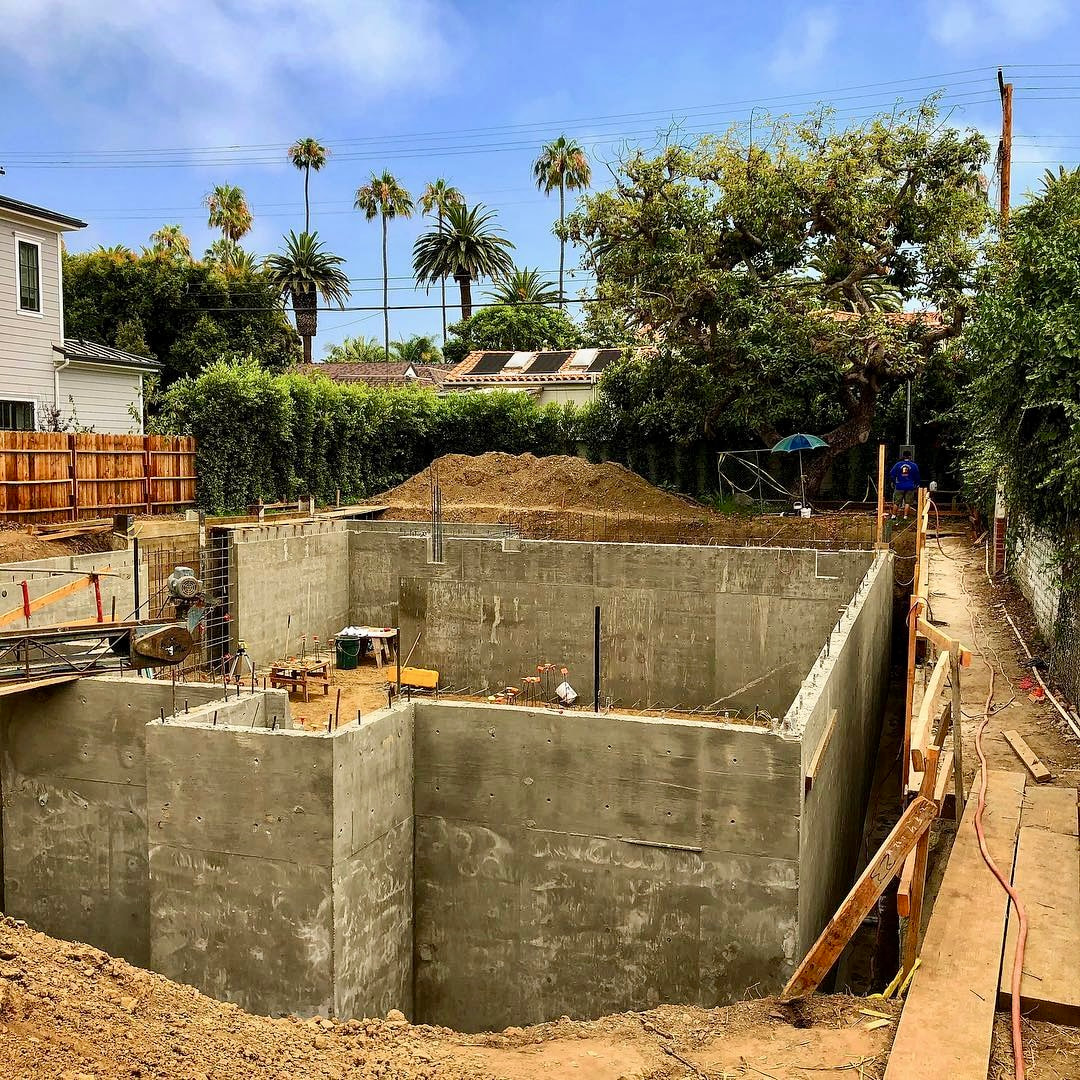
On a hillside, more of the budget goes into the ground. Foundations, retaining walls, drainage, and excavation are engineered for the slope and the soil, and they can add six figures before framing begins.
Access matters just as much. Narrow streets, steep driveways, and limited staging space affect how materials arrive, how equipment works, and how long each step takes.
Soils, foundations, and retaining walls
Hillside work usually starts with a geology and soils report. It tells the engineer what the ground can carry and how it moves, and the foundation design follows from it.
Depending on the site, that often means drilled caissons tied together with grade beams, retaining walls to hold the slope, and drainage designed to carry water away from the structure. These systems are invisible once the house is finished, and they are the part of a hillside build that most needs to be done right.
Permits and hillside rules in Los Angeles
Hillside lots generally carry extra review. Inside the City of Los Angeles, many hillside parcels fall under the Baseline Hillside Ordinance, which generally limits floor area and height and sets grading limits based on the lot and its slope. Check the current rules for your address with LADBS, because they depend on zoning and slope.
Grading that exports soil above certain thresholds can also require an approved haul route, and many hillside areas are in a Very High Fire Hazard Severity Zone, which brings fire-resistant construction requirements. We look for these early so the schedule and budget account for them from day one.
Planning a hillside budget
Custom homes in Greater Los Angeles generally range from about $400 to $800 per square foot of finished living space, with hillside sites, complex structural work, and high-end finishes pushing toward and above the upper end.
Because site conditions are discovered through survey and soils reports rather than seen on a walkthrough, they are the most common source of budget surprises. Getting those reports before design is final is the best protection.
How we run a hillside project
Every project follows the same four steps.
- Consult: we walk the site, look at access and staging, and write down what is in this job
- Plan: drawings, engineering, a schedule, and a clear price before anyone starts
- Build: one crew, weekly updates and photos, and every change gets a written yes first
- Deliver: a walkthrough, a punch list, and we stand behind the work
Frequently asked questions
Does building on a hillside cost more?
Usually, yes. Hillside lots often need engineered foundations such as caissons and grade beams, retaining walls, drainage, and soil export, and limited access slows every delivery. Those costs are driven by the site, which is why a geology and soils report before design is the best way to plan the budget.
What is the Baseline Hillside Ordinance?
It is a set of City of Los Angeles rules for many hillside residential lots. It generally limits a home’s floor area and height and sets grading limits based on the lot size, zoning, and slope. Whether and how it applies depends on the specific parcel, so check the current rules with LADBS for your address.
Do I need a soils report for a hillside project?
In most cases, yes. A geology and soils report tells the engineer what the ground can support and how it behaves, and the foundation and retaining design are based on it. Building departments commonly require one for new homes and additions on sloped lots.
What is a haul route?
A haul route is an approved plan for trucking excavated soil off a site. In the City of Los Angeles, hillside grading that exports soil above certain amounts can require one, which adds review time. We identify that early so it is part of the schedule.
Is SAS Builds licensed?
Yes. SAS Builds holds California contractor License #1073990, issued by the Contractors State License Board. You can verify it for free at cslb.ca.gov.