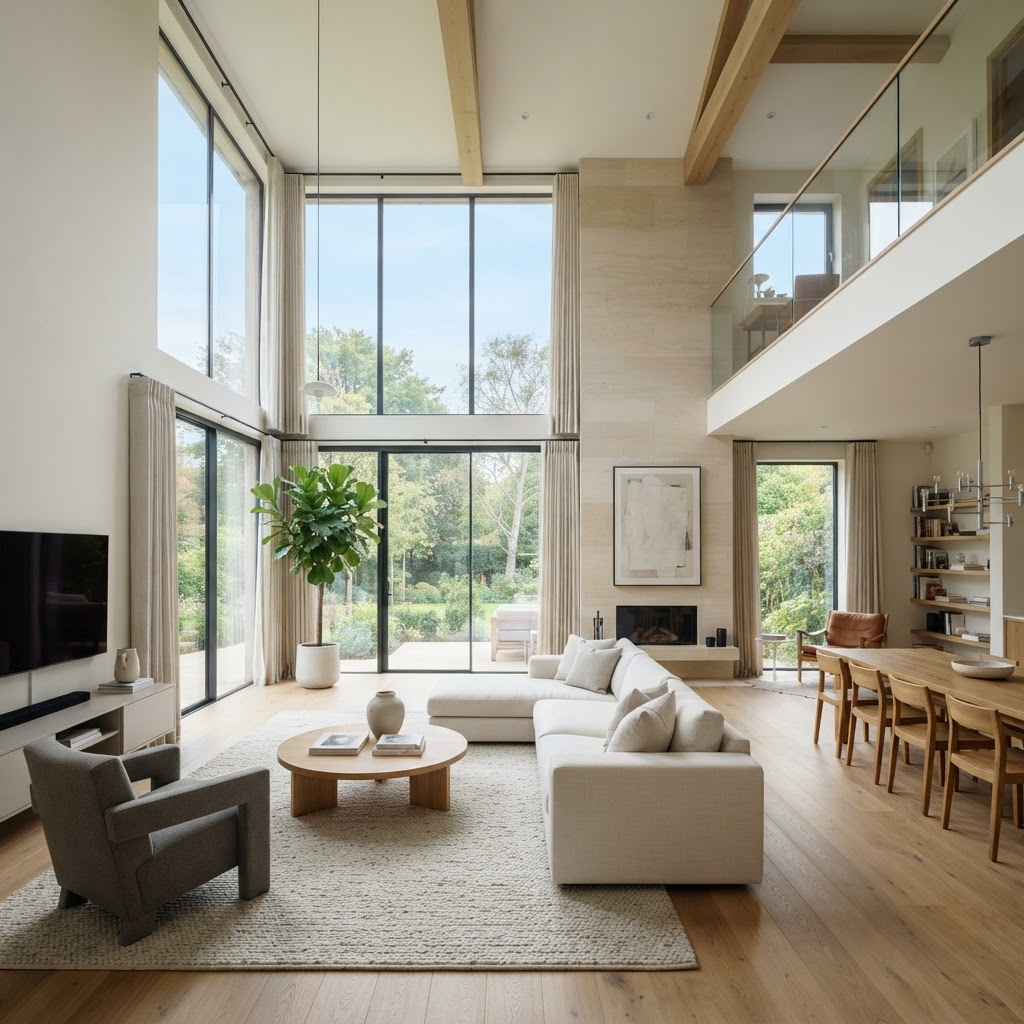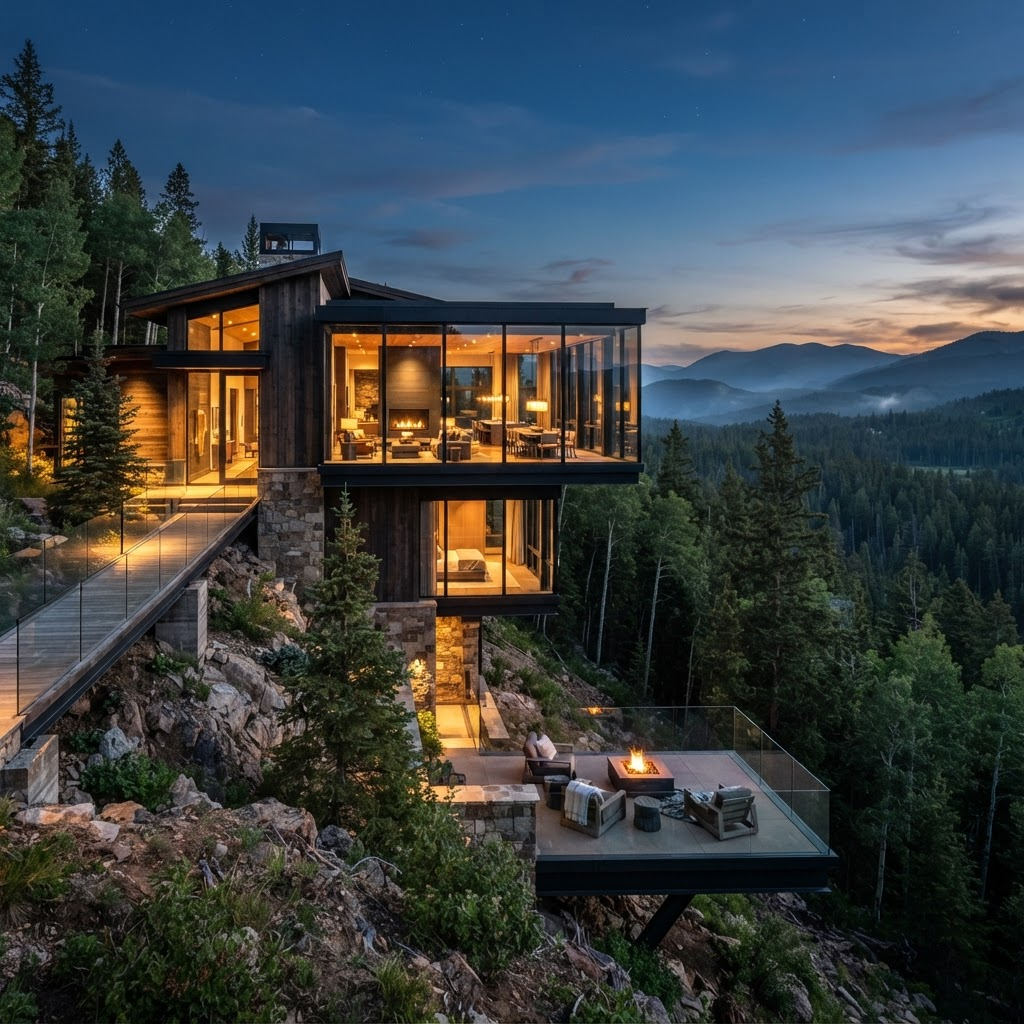
Stone: marble, granite, quartzite, and limestone
Natural stone is chosen for movement and depth that manufactured slabs still struggle to copy. It is also porous, which means it stains, etches, and needs sealing on a schedule — not once at install and never again.
Marble etches with lemon, wine, and cleaners. That is not a defect; it is how calcite stone ages. Granite is tougher on a kitchen island. Quartzite (the rock, not quartz countertops) can look like marble with more durability. Limestone and travertine belong on floors and walls that can accept a softer, honed life, not on a heavy-use kitchen island unless you like patina.
Use stone where you want it to be seen and touched: counters, fireplace surrounds, wet-room walls, a primary bath floor. Skip it on a mudroom floor that sees grit and dogs unless you pick a dense, honed piece and accept wear.
Tile: porcelain, ceramic, and where grout actually matters
Porcelain is the workhorse. It is dense, holds up outdoors and in showers, and comes in looks that mimic stone, wood, and concrete without the same maintenance. Ceramic is fine on walls; it is a weaker choice on floors and wet floors.
Large-format tile means fewer grout lines, which looks cleaner and is easier to mop — but it needs a flatter substrate and a better installer. Small mosaic and zellige look handmade because they are irregular; budget extra for layout, sealing, and living with grout that will never be perfectly even.
Grout color and joint size change the room as much as the tile does. A pale grout on a kitchen floor will show every crumb. A dark grout on a white shower will haze. Decide those two things in the room, not on a board.
Floors: hardwood, engineered, vinyl, and laminate
Site-finished hardwood is the classic: solid boards, sanded and coated in place, and it can be refinished several times over the life of the house. It moves with humidity, which Los Angeles still has seasonally, and it does not love slabs or radiant heat unless the assembly is designed for it.
Engineered hardwood is a real wood wear layer on a stable core. It is the better choice over concrete, over radiant, and in wider planks that would cup if they were solid. You can refinish it, but only as many times as the wear layer allows — ask how thick that layer is before you buy.
Luxury vinyl plank (LVP) is waterproof in a way wood is not, which is why it belongs in rentals, kids’ baths, and rooms that see spills. The good product is quiet, dense, and well locked; the cheap product photographs like wood and sounds like plastic. Laminate is a printed photo under a wear film. It is the budget option. It is not for wet rooms, and it cannot be refinished — when it fails, you replace it.
- Hardwood — longest life if you will refinish; keep it out of standing water
- Engineered wood — best wood look over slabs and radiant; check wear-layer thickness
- Vinyl plank — best water story; buy density and a quiet pad, not just a sample color
- Laminate — lowest cost; plan on replacement, not repair
Walls: paint, plaster, lime wash, and Roman clay
Paint is still the most flexible finish in the house. Sheen is the decision that matters: flat hides drywall flaws and scuffs badly; eggshell and satin wipe clean in kitchens, baths, and hallways. Prep and primer cost more than the can and determine whether you still like the color in a year.
Plaster (including Venetian) is a trowel finish with depth paint cannot fake. It is harder, more expensive, and less forgiving of movement and leaks. Use it on a feature wall or a powder room you will not bang with luggage.
Lime wash is a mineral paint. It soaks in, chalks slightly, and shifts with the light. It loves masonry and plaster; it is picky on shiny drywall unless the wall is primed for it. Roman clay is a thin clay-and-lime plaster that reads soft and matte — the look a lot of 2020s interiors are after — without going to full Venetian. Both need a painter who has done them, not a first-time roller.
How to choose without drowning in samples
Pick the floor first. It is the largest surface, the hardest to change, and it sets how warm or cool everything else can be. Then counters, then wall finish, then hardware. Samples should live in the actual room for a few days, in morning and evening light, next to the stone or wood they will sit beside.
Budget a named allowance for every finish category before drawings go to permit. A “nice tile” with no number attached is how a kitchen jumps $20,000 after the boxes show up. If two materials look the same on a board, choose the one that matches how the room is used — water, sun, kids, dogs — not the one that won the showroom lighting.
Frequently asked questions
What is the difference between hardwood and engineered wood floors?
Hardwood is solid wood through the board and can usually be sanded and refinished several times. Engineered wood is a real wood top layer on a stable core, so it handles concrete slabs, wider planks, and radiant heat better. You can refinish engineered floors only as many times as that top layer is thick, so ask for the wear-layer measurement before you buy.
Is vinyl plank as good as hardwood?
Vinyl plank is better than wood anywhere water is likely — baths, rentals, and spill-prone kitchens — because it does not swell the way wood does. Hardwood still looks and feels richer and can be refinished for decades. A dense, well-installed vinyl plank is a honest material; a cheap one looks like wood in a photo and sounds like plastic in the room.
What is the difference between lime wash, Roman clay, and plaster?
Lime wash is a mineral paint that soaks into the wall and shifts with light. Roman clay is a thin clay-and-lime plaster with a soft matte depth, popular in current interiors. Traditional or Venetian plaster is a thicker trowel finish, more durable and more expensive, with a higher skill requirement. All three need a finisher who has installed them before.
Should I use marble on a kitchen island?
Only if you accept etching and staining as part of the look. Marble is calcite; lemon, wine, and many cleaners mark it. Granite, quartzite, porcelain slab, or quartz (engineered stone) will stay calmer on a working island. Marble is a better match for a bath, a pastry counter you will baby, or a wall where nothing sits and spills.
When should I lock finish selections?
Before construction starts, with a dollar amount on every allowance. Floors, tile, and stone often have long lead times, and a late change can hold cabinets, counters, and punch list. Living with samples in the actual rooms for a few days prevents most of the expensive second thoughts.