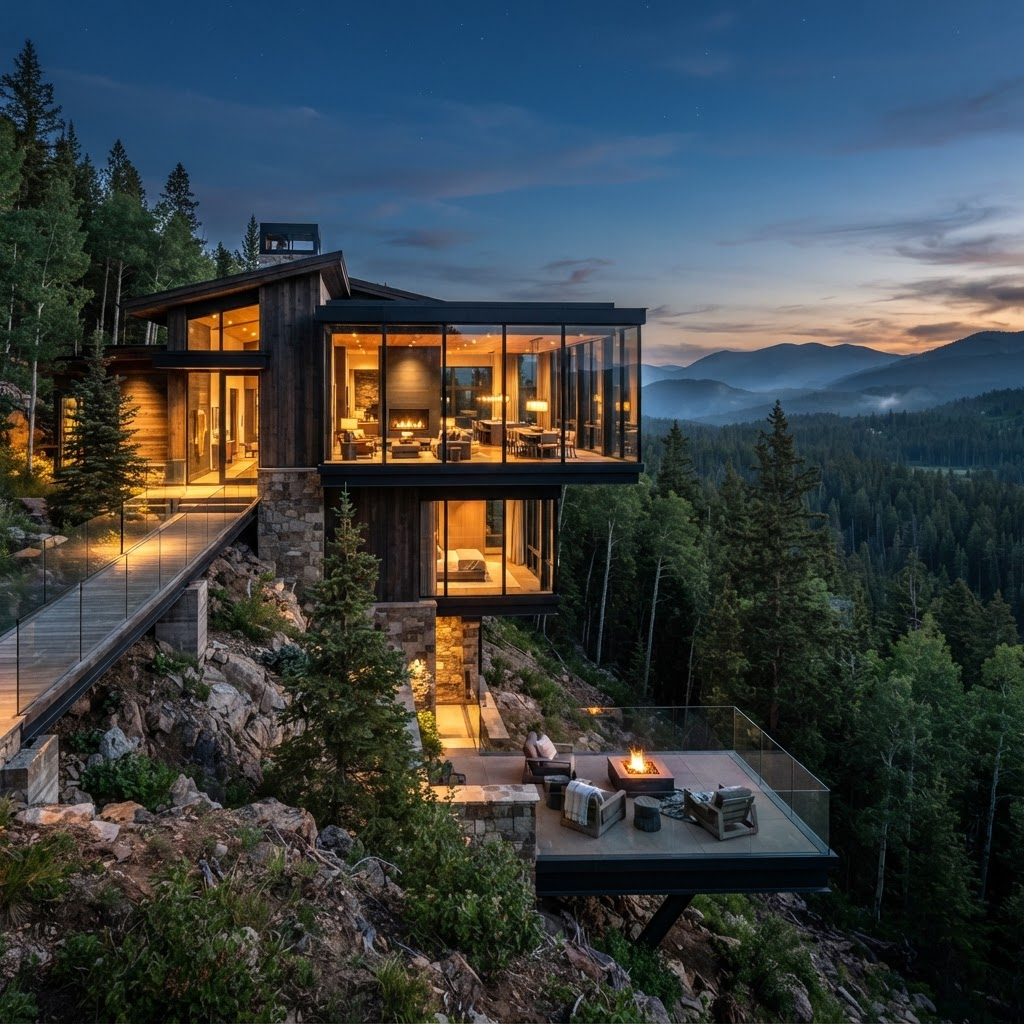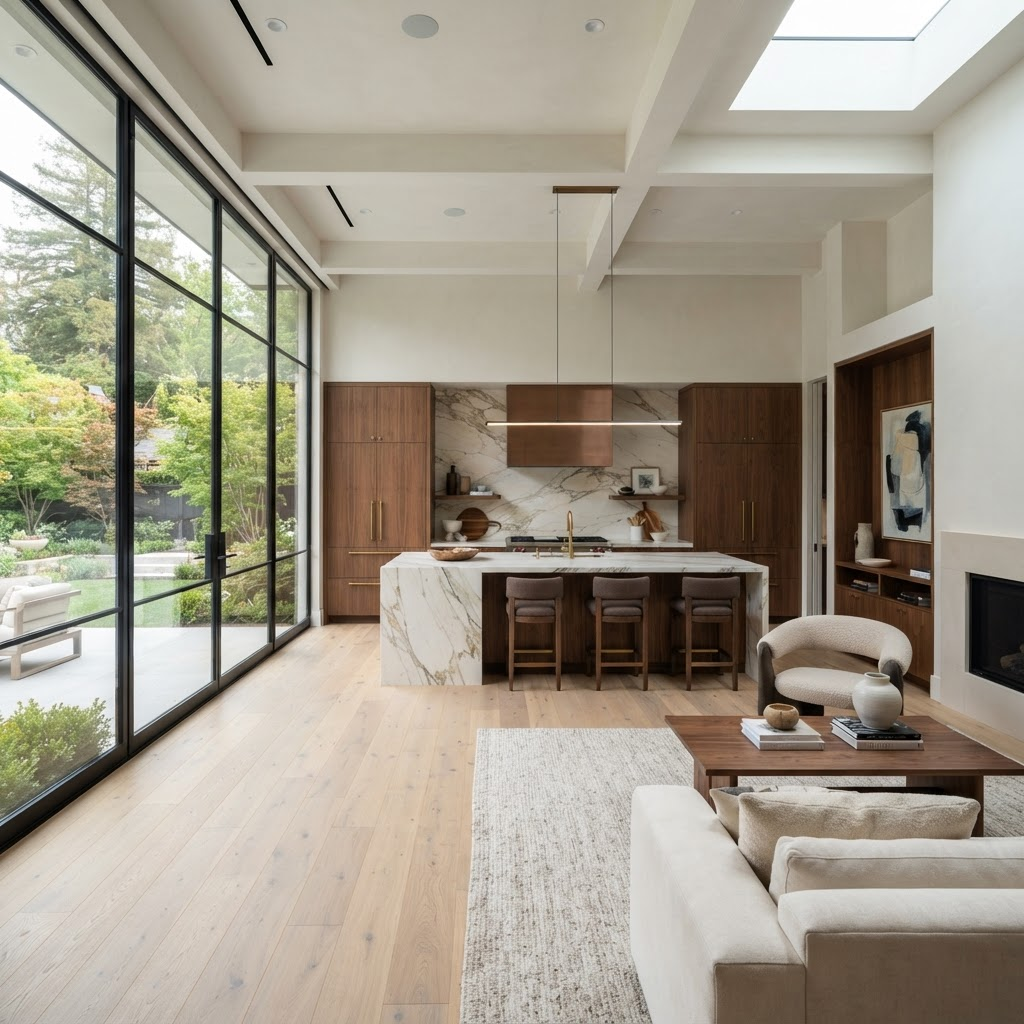
Figures below are planning ranges for Greater Los Angeles, intended to help you build a realistic budget. They are not a quote — every project is priced from its own site, scope, and selections.
Compare the real costs, not just the per-foot numbers
Start with planning ranges, then adjust for how much of the existing house survives. A renovation that keeps the foundation, framing, and roof is a very different project from one that keeps only a few walls.
- Whole-home cosmetic refresh — $150 to $250 per square foot
- Whole-home gut renovation — $300 to $550 per square foot
- Ground-up custom home — roughly $400 to $800 per square foot of finished living space
- Demolition, haul-off, and site preparation — a separate line item for a rebuild, priced from the site
- Soft costs — commonly 15 to 25 percent on top of construction in Los Angeles, for either path
- Contingency — 15 to 20 percent for renovation, 10 to 15 percent for new construction
When remodeling makes more sense
Remodeling wins when the bones are sound and the layout mostly works. If the foundation is in good condition, the framing is straight and adequately sized, and your main goals are new finishes, a better kitchen, or a reworked floor plan within the existing shell, renovating preserves value you have already paid for.
Remodeling can also preserve rights you might lose with a rebuild. Many older Los Angeles homes sit closer to property lines, or are larger, than current zoning would allow for a new house. Keeping the existing structure can keep those nonconforming conditions; tearing it down usually means the new house must meet today’s setbacks, height limits, and floor-area rules.
Character is a real factor too. A well-built older house with architectural detail you love may be worth preserving even when the numbers are close.
When tearing down makes more sense
Rebuilding wins when renovation would replace most of the house anyway. Signs include a failing or inadequate foundation, extensive dry rot or termite damage, undersized framing, a layout that fights everything you want, and systems that all need replacing at once.
Major renovations also pull much of the house up to current code, including energy, structural, and in fire hazard zones, fire-resistant construction requirements. When the renovation scope gets large enough, you can end up paying near-new-construction prices while living with an old structure’s compromises. A new house lets you design the layout, structure, energy performance, and fire resistance from the ground up.
Rebuilding also brings more certainty. New construction carries a lower contingency than renovation because there is far less hidden behind the walls.
Check zoning and permits before you decide
Before comparing budgets, confirm what you are allowed to build. Zoning can make the decision for you.
Ask what the current setbacks, height limits, lot coverage, and floor-area limits allow on your parcel, and compare that with what exists today. In the City of Los Angeles, hillside lots fall under hillside rules that limit size and grading. Coastal Zone parcels may require a Coastal Development Permit for either a major remodel or a rebuild. Historic overlays can restrict demolition outright. Some jurisdictions also treat a remodel that removes most of the existing walls as new construction, so a "remodel" can lose its advantages if the scope grows too far.
An early feasibility review with a contractor, architect, or land-use consultant is inexpensive compared with designing a house the parcel will not allow.
Schedule and living arrangements
Either path usually means moving out for a large project. A whole-home gut renovation commonly takes 9 to 16 months of construction; a ground-up custom home takes 12 to 18 months, after design and permitting.
Permitting for a new house is often longer than for a renovation, but renovation schedules carry more risk from discovered conditions. Factor in the cost of living elsewhere and, if you are financing, the interest carried during construction. A few extra months of schedule can matter as much as a difference in construction price.
A simple way to frame the decision
If you are undecided, ask three questions in order. The answers usually point clearly to one path.
First, what will the parcel allow? If current zoning would force a smaller or more constrained house than the one you have, a remodel that preserves the existing structure may be the only way to keep that space. Second, what condition is the structure in? If the foundation, framing, and systems are sound, remodeling builds on value you already own; if most of them need replacing, the case for rebuilding grows quickly. Third, how much of the existing house do you actually want? If the answer is "the location and not much else," a new house designed around how you live will likely serve you better for decades.
A feasibility review that covers zoning, structural condition, and rough pricing for both paths is a small investment compared with the size of the decision.
- What does current zoning allow compared with what exists?
- Are the foundation, framing, and systems sound?
- How much of the existing house do you want to keep?
Frequently asked questions
Is it cheaper to tear down and rebuild or to remodel?
Remodeling is usually cheaper per square foot: a whole-home gut renovation commonly runs $300 to $550 per square foot in Greater Los Angeles, compared with roughly $400 to $800 for a new custom home plus demolition. But if a renovation would replace the foundation, framing, and systems anyway, the costs converge and rebuilding often delivers more value.
How much does it cost to demolish a house in Los Angeles?
Demolition is priced from the site: house size, construction type, access, hazardous materials such as asbestos or lead, and haul-off distance all affect the cost. It requires its own permit, and older homes typically need a hazardous materials survey first. Ask for demolition to be priced as a separate line item when comparing a rebuild with a remodel.
Will I lose square footage if I tear down my house?
Possibly. Many older homes are larger or closer to property lines than current zoning allows. A remodel can often keep those nonconforming conditions, while a new house usually must meet today’s setbacks, height limits, and floor-area rules. Confirm what your parcel allows before deciding.
When is a house not worth remodeling?
When the renovation would replace most of the structure anyway. A failing foundation, widespread rot or termite damage, undersized framing, a layout that cannot be fixed without moving most walls, and systems that all need replacing are signs that rebuilding may cost little more and deliver a far better house.
How long does a teardown and rebuild take?
Plan for design and permitting followed by 12 to 18 months of construction for a ground-up custom home. From first sketch to move-in, custom homes in Greater Los Angeles typically take 24 to 36 months, longer on hillside or coastal parcels.