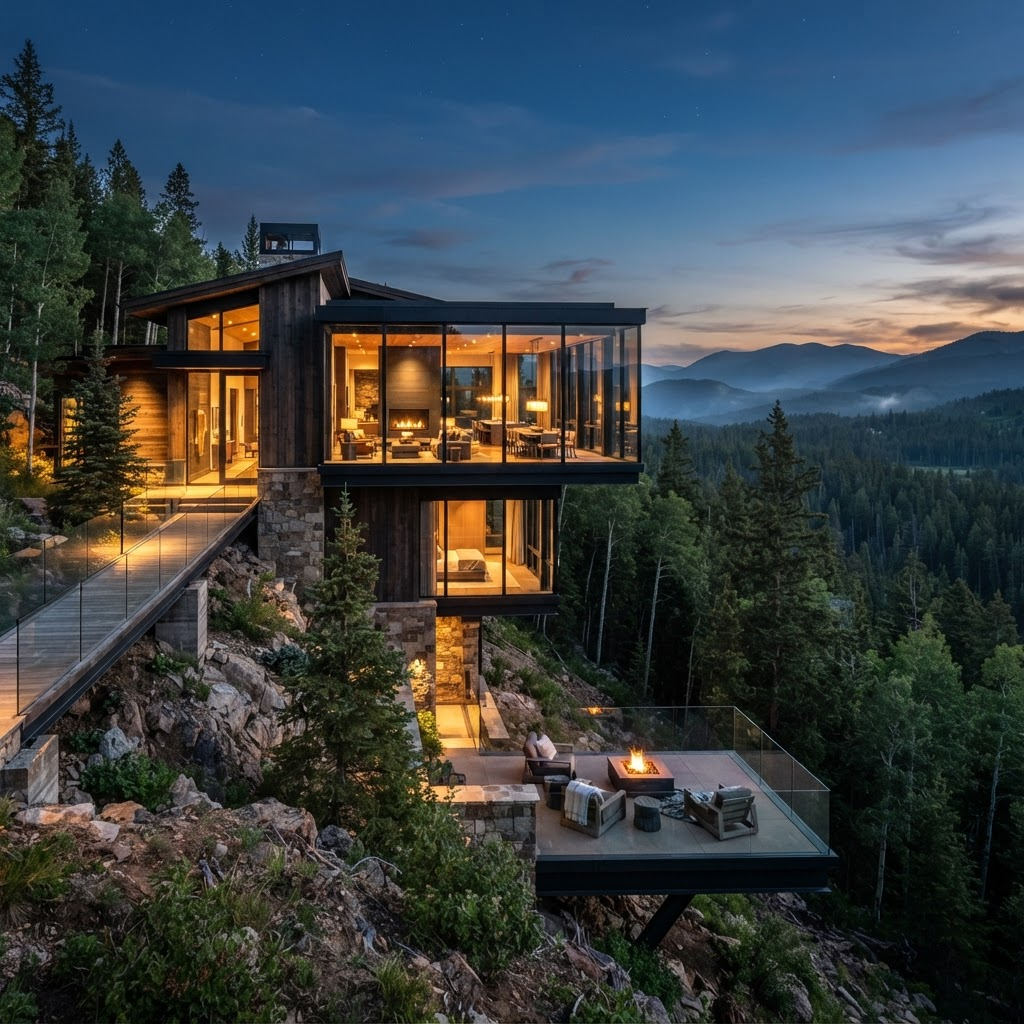
Early 1990s: oak, brass, hunter green, and volume
The early 1990s kitchen is easy to spot: raised-panel oak or pickled-oak cabinets, brass or polished-brass hardware, hunter green or burgundy walls, and a speckled laminate or early granite island. White appliances were giving way to almond and black. Floors were oak strip, or wall-to-wall carpet running farther into living rooms than we would do now.
Baths ran oak vanities, theatrical makeup lighting, brass faucets, and wallpaper or a painted border. Showers were smaller; tubs were still the feature. Exteriors leaned Mediterranean stucco, brick, or a country-French mix, often with plant shelves, volume ceilings, and a lot of drywall pop-outs.
If this is your house, the bones — layout, window openings, ceiling height — may still work. The dated parts are usually the cabinet doors, the metal tone, and the green. You do not have to gut a room to leave 1992; sometimes it is doors, paint, and lighting.
2000s: Tuscan, cherry, bronze, and beige
The 2000s brought darker wood — cherry and espresso — oil-rubbed bronze, tumbled marble, and the long beige era. Granite with heavy movement sat on kitchens that also wanted stainless appliances and a Tuscan or “old world” story: glaze on cabinets, iron scroll, travertine floors, vessel sinks, and glass mosaic tile in the backsplash.
Openness started here: great rooms, taller islands, and interiors painted a single greige so the stone could be the event. Exteriors went larger — more garage, more roof breaks, more stone veneer at the entry. This is the decade a lot of Los Angeles remodels are still undoing, because the materials were expensive and installed well, just in a palette that now reads heavy.
A 2000s house often has good bones and tired glaze. Lightening cabinets, swapping bronze for a quieter metal, and replacing travertine with a calmer floor does more than another layer of Tuscan.
2010s: gray, white shaker, subway, and quartz
The 2010s flattened the palette. Gray walls, white or gray shaker cabinets, subway tile, quartz counters, and wide-plank gray-brown floors showed up in almost every market. Barn doors, farmhouse sinks, matte-black taps at the end of the decade, and open shelves replaced upper cabinets in photos more often than in real kitchens that need storage.
Industrial and farmhouse mixed: iron, reclaimed wood, Edison bulbs. Baths went frameless glass, large porcelain tile, and floating vanities. The look was clean and easy to sell, which is why so much of it still exists — and why a 2016 gray kitchen can feel as dated now as oak did in 2010.
If you are in this decade, the layout is often already open. The work is warming the gray: wood that has yellow in it, a plaster or lime-wash wall, hardware that is not all black, and a floor that is not ashy.
2020s: warm light, plaster, unlacquered brass, and outdoor rooms
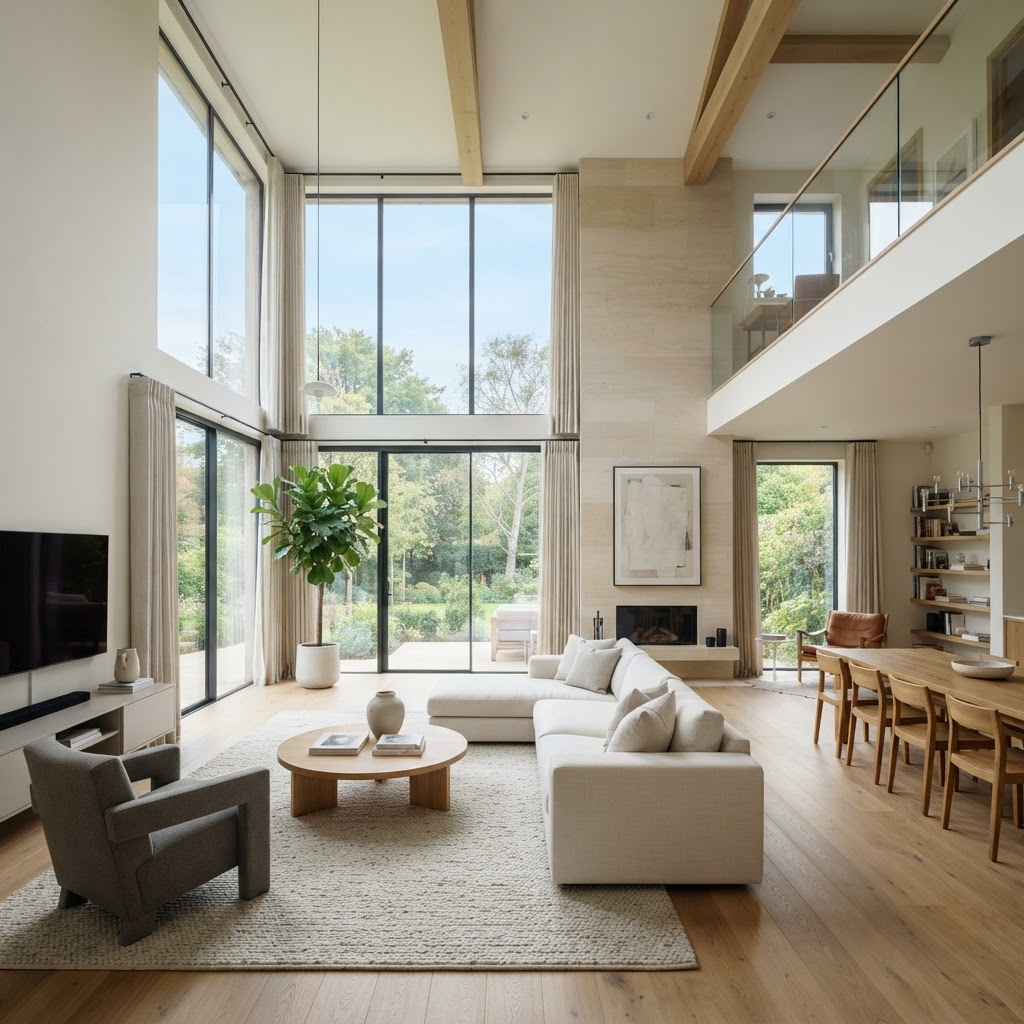
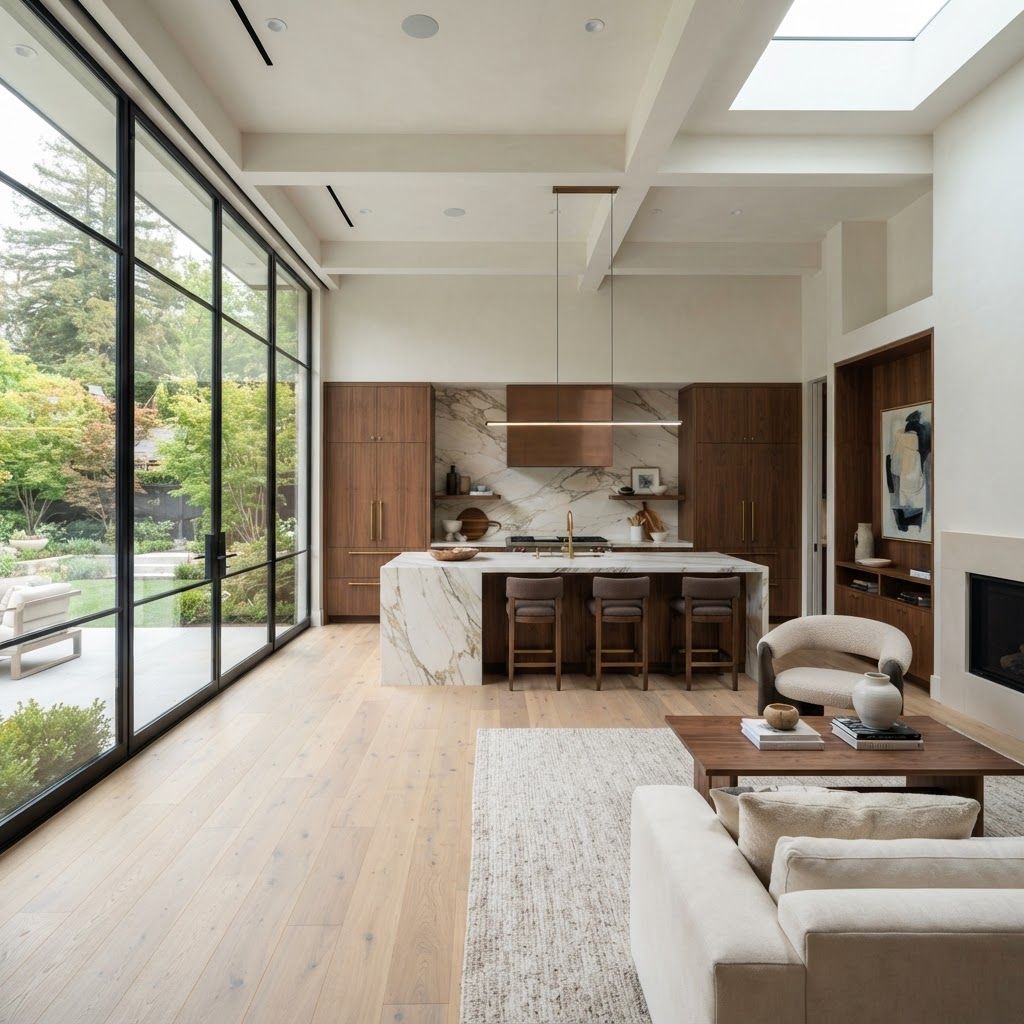
The 2020s pulled color back toward cream, putty, and brown, and put texture on the walls: lime wash, Roman clay, plaster, fluting, and arches. White oak replaced gray oak. Unlacquered brass and mixed metals came back, not the shiny 1990s brass. Zellige and handmade tile replaced perfectly even subway. Quartz and porcelain slabs stayed for durability; marble came back for people who want the etch.
Kitchens still open to living space, but they hide more — appliance panels, pantries, and less open shelving. Outdoor kitchens, covered dining, and indoor-outdoor glass are not an extra in Los Angeles; they are part of the house. Curves, softer lighting, and fewer cool-gray surfaces are the tell.
This palette will date too. The parts worth keeping are the ones that are about light, air, and honest materials — not the trend of a single year. Build the plaster wall because you like how it takes evening light, not because a feed said Roman clay.
How to use this when you remodel
Name the decade you have before you name the decade you want. A 1990s oak kitchen and a 2010s gray kitchen fail in different ways and cost different amounts to unwind. Keep what is still true — a good layout, a window, a stone that still looks like stone — and change the parts that only signal a year.
Mixing decades on purpose can work if the metal, the wood tone, and the wall finish agree. Mixing them by accident — cherry glaze, gray LVP, and 2020s arches — usually looks like a pause between projects. Samples in the room, next to the pieces you are keeping, will tell you faster than a mood board.
Frequently asked questions
How can I tell what decade my house interiors are from?
Look at cabinets, metal finishes, and the main floor together. Early 1990s usually means oak or pickled oak and brass. The 2000s mean cherry or espresso, oil-rubbed bronze, granite, and travertine. The 2010s mean gray or white shaker, subway tile, and quartz. The 2020s mean white oak, plaster or lime wash, mixed or unlacquered brass, and warmer paint.
Do I have to gut a 1990s kitchen to make it current?
Not always. If the layout and box construction are sound, new doors or a painted finish, updated lighting, and a change in hardware and counters can leave the 1990s without a full demo. Gut the kitchen when the plan is wrong, the boxes are failing, or you need to move plumbing and walls anyway.
Why do 2010s gray kitchens already feel dated?
Gray was used as a safe, cool default on cabinets, paint, and floors at the same time, so the rooms have little warmth or contrast. Current work brings back wood with yellow or brown in it, softer wall finishes, and metals that are not all matte black. The layout of a 2010s kitchen is often still right; the palette is what ages it.
What colors and materials define 2020s homes?
Warm light neutrals, white oak, plaster or lime wash or Roman clay, handmade tile, unlacquered brass or mixed metals, and a stronger indoor-outdoor connection. Appliance panels and closed storage are more common than they were in the open-shelf 2010s. Durability still sits on quartz or porcelain slabs even when marble is used as a feature.
Should I remodel to a specific decade look?
Use a decade as a reference, not a costume. Keep materials that will still make sense when the trend moves — real wood, honest stone, good light — and let hardware and paint be the parts you can change later. A house that only copies 2024 will feel as stuck in 2032 as Tuscan glaze does now.